Introduction
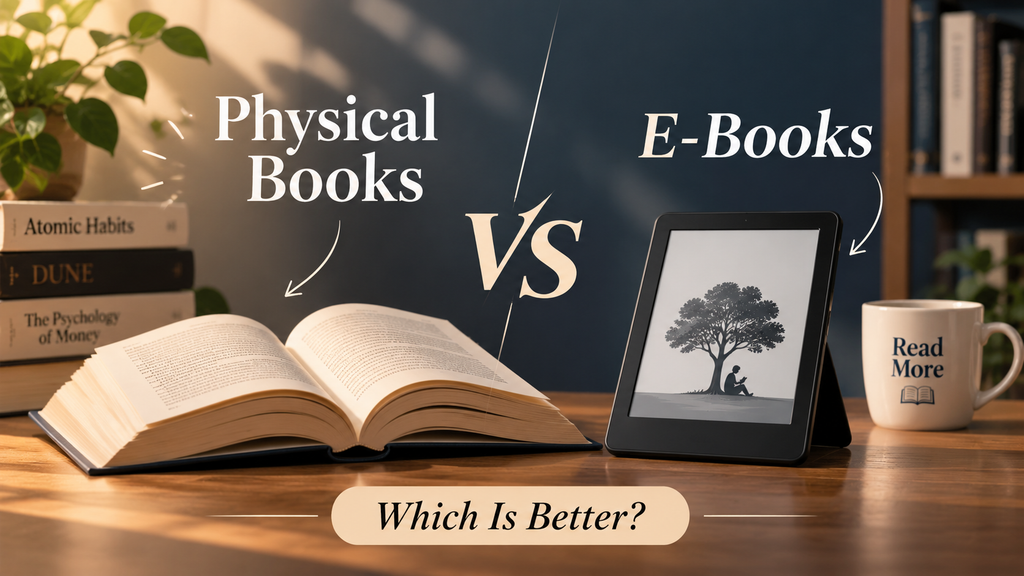
Reading has always been one of the most meaningful ways to explore new ideas, discover different worlds, and gain knowledge. For generations, physical book have been a reader’s trusted companion. However, technology has introduced a new way to enjoy reading: e-books.
Today, readers can choose between holding a traditional printed book and reading hundreds of titles on a digital device.
But which option is actually better?
Is the charm of printed pages worth more than the convenience of digital reading? Or are e-books the smarter choice for modern readers?
Let’s explore the differences between physical books and e-books to help you decide.
1. Reading Experience: The Beauty Of Printed Pages
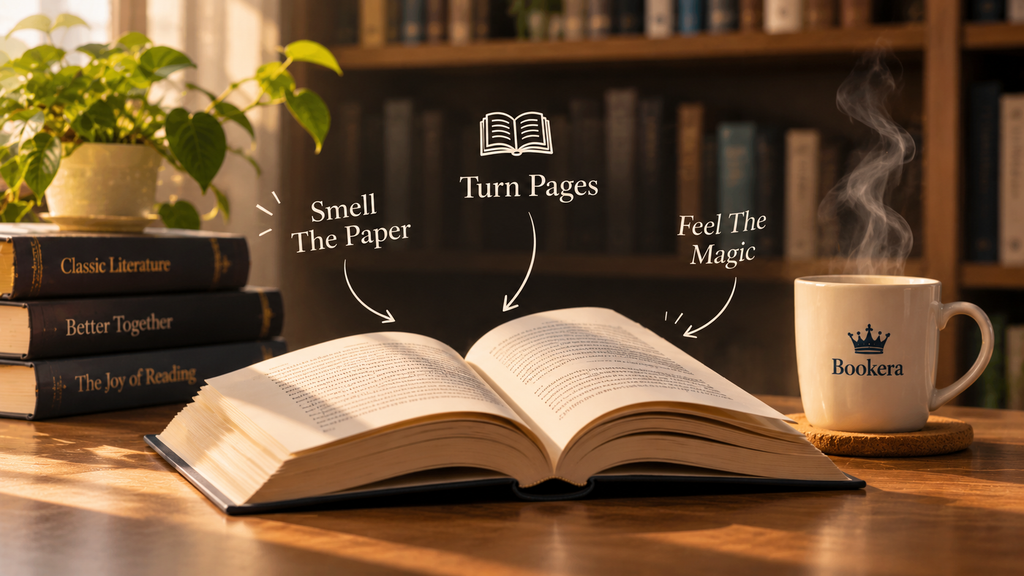
There is something special about reading a physical book. The feeling of turning pages, the smell of paper, and the satisfaction of completing a chapter create an experience that many readers genuinely enjoy.
Physical books also allow readers to disconnect from digital devices and focus entirely on the story.
E-books offer a different experience. Readers can adjust font sizes, change screen brightness, highlight important sentences, and search for specific words instantly.
Our Take: Physical books win when it comes to the traditional reading experience, while e-books offer more customization.
2. Convenience And Portability: Carry Thousands Of Books
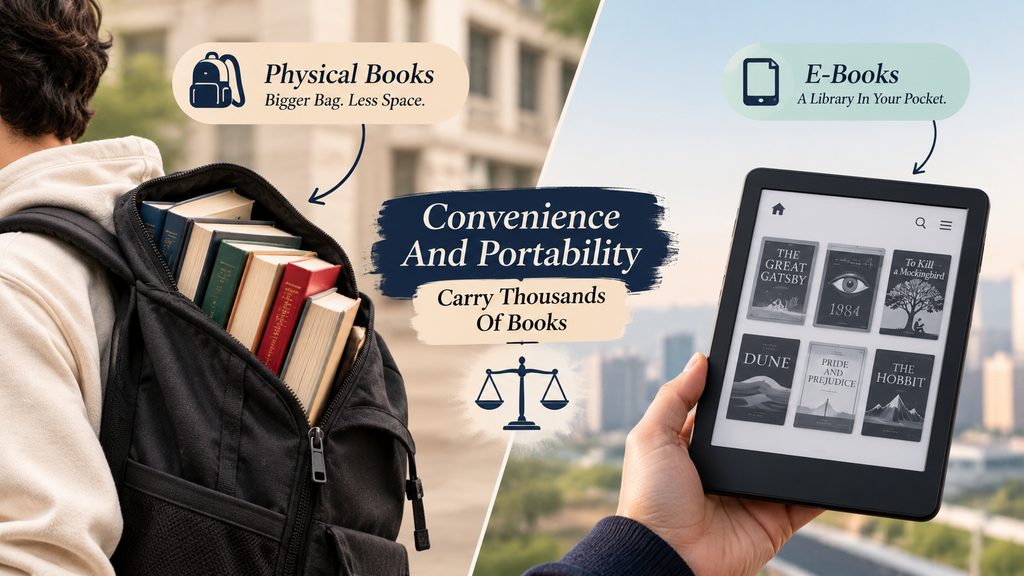
Imagine travelling with ten different books in your backpack. It would take up considerable space and add extra weight.
This is where e-books have a major advantage.
A single smartphone, tablet, or e-reader can store hundreds or even thousands of books. You can switch between titles whenever you want without carrying anything extra.
Physical books, however, require physical storage and can become inconvenient during travel.
Our Take: E-books are the clear winner for portability and convenience.
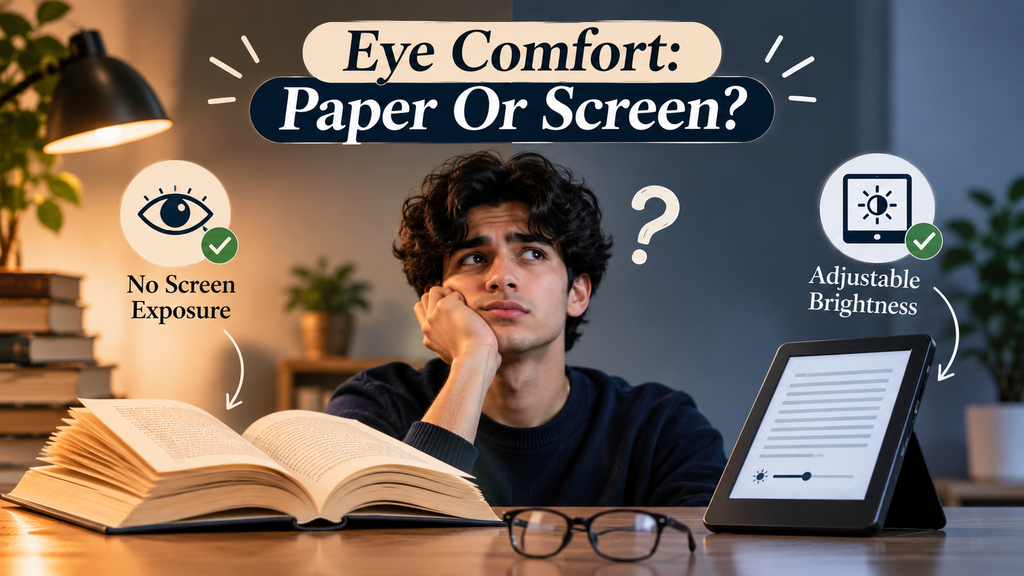
3. Eye Comfort: Paper Or Screen?
Eye comfort is another important factor when choosing how to read.
Physical books do not require a digital screen, making them a good option for readers who want to reduce additional screen exposure.
E-books can be read on smartphones, tablets, or dedicated e-readers. However, reading comfort depends on the device, brightness, lighting conditions, and duration of use.
Dedicated e-readers with adjustable lighting can provide a different experience from reading on a smartphone.
Our Take: Physical books are a good choice if you prefer reading without screens.
4. Cost And Affordability: Which Saves More Money?
The cost of reading depends on the titles you choose and where you purchase them.
Physical books may involve printing, packaging, shipping, and distribution costs. However, second-hand bookstores, public libraries, and book exchanges can make reading more affordable.
E-books can sometimes be cheaper because they do not require printing or physical delivery. Many classic books are also legally available for free.
However, not every e-book is inexpensive, and dedicated reading devices require an initial investment.
Our Take: Neither format is always cheaper. Compare prices before purchasing.
5. Focus And Concentration: Fewer Distractions, Better Reading?
One of the biggest challenges of digital reading is distraction.
When reading on a smartphone, notifications, social media applications, messages, and other activities can interrupt your concentration.
Physical books provide a simpler environment. There are no notifications or applications competing for your attention.
Of course, dedicated e-readers and distraction-free reading settings can also help digital readers stay focused.
Our Take: Physical books generally make it easier to avoid digital distractions.
6. Storage And Environmental Impact
Physical books need shelves, cupboards, or dedicated storage space. Over time, collecting books can require considerable room.
E-books take up very little physical space and can be accessed through compatible devices.
Environmental impact is more complicated. Printed books require paper, manufacturing, and transportation, while digital reading depends on electronic devices, electricity, and their manufacturing and disposal.
Neither format is automatically the environmentally friendly choice in every situation.
Our Take: E-books are better for saving physical storage space.
Physical Books Vs E-Books: Quick Comparison
| Feature | Physical Books | E-Books |
|---|---|---|
| Reading Experience | Traditional | Digital |
| Portability | Limited | Excellent |
| Storage | Requires Space | Minimal |
| Screen Exposure | None | Device-Dependent |
| Highlighting | Physical Markings | Digital Tools |
| Distractions | Usually Fewer | Device-Dependent |
| Collecting | Excellent | Digital Library |
| Accessibility | Depends On Edition | Adjustable Features |
Which One Should You Choose?
The right choice depends on your reading habits, lifestyle, and personal preferences.
Choose Physical Books If You:
- Enjoy holding printed pages.
- Love collecting books and building a personal library.
- Prefer reading without digital screens.
- Find it easier to concentrate away from notifications.
- Enjoy the traditional reading experience.
Choose E-Books If You:
- Travel frequently.
- Want to carry multiple books in one device.
- Prefer adjustable fonts and reading settings.
- Enjoy instant access to digital libraries.
- Want to save physical storage space.
And if you enjoy both, there is absolutely no reason to choose only one.
Final Thoughts: Is There Really A Winner?
Physical books and e-books both have something valuable to offer.
Physical books bring nostalgia, a traditional reading experience, and a sense of connection with the pages. E-books bring convenience, portability, and accessibility to modern readers.
Ultimately, reading is not about the format you choose. It is about the knowledge you gain, the stories you experience, and the ideas that stay with you.
So, whether you prefer turning paper pages or tapping a digital screen, keep reading and discovering something new every day.
Because the best book is the one you actually read.